Mixed-terrain mobility
Designed to combine efficient rolling with active terrain adaptation.
Modular autonomous ground systems
Teammate develops wheel-legged unmanned systems that move payloads, power, sensors, tools, drones, and protective equipment across terrain that stops conventional vehicles.
Subscribe for updatesPut capability forward. Keep people back.
Government teams should not need a different robot for every task. Teammate is building a common mobility system that can be configured around the mission, supported as one fleet, and directed by the people accountable for the outcome.
The TQ architecture
A low, stable payload deck sits above four articulated wheel-legs. The result is efficient movement across roads and floors with the ability to negotiate curbs, debris, slopes, and broken ground.
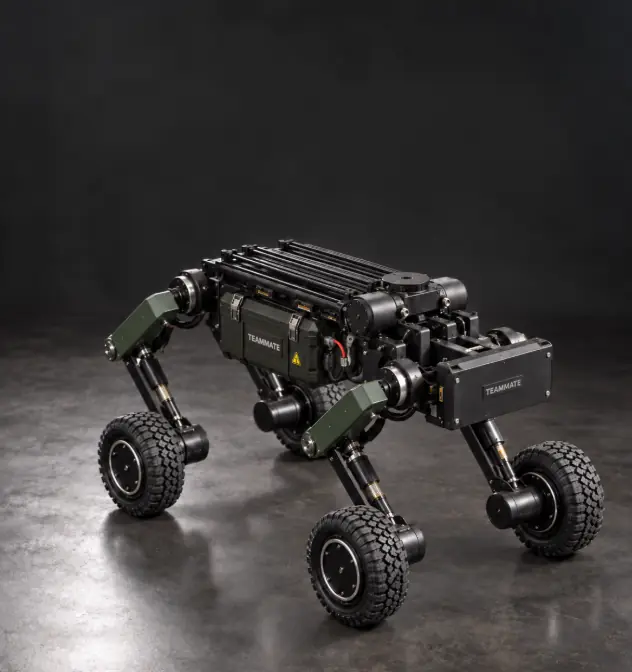
Designed to combine efficient rolling with active terrain adaptation.
A shared mechanical, power, and data architecture for mission modules.
Autonomous navigation, remote operation, and accountable human direction.
One mobility family reduces training, spares, and support fragmentation.
Configure around the mission
Explore every configuration below, with its capabilities and operational benefits.
TQ-00 / COMMON
Shared mobility core for the full Teammate fleet.
The low open chassis supplies mobility, onboard computing, perception, power, and the mission deck used by every configuration.
Field multiple roles without fielding multiple unrelated vehicles.
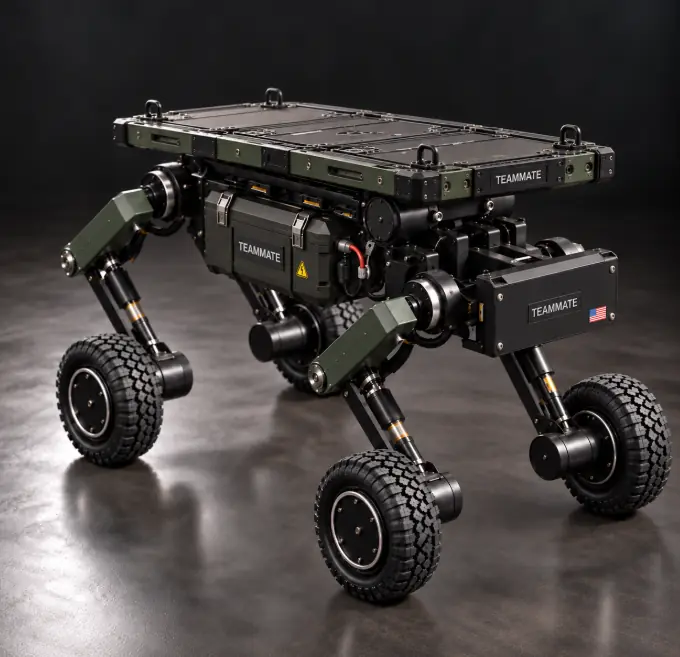
TQ-01 / CARRIER
Low, open transport deck for adaptable government payloads.
A clear full-length deck accepts containers, equipment, sensors, and program-specific hardware while preserving a low center of mass.
Move mission equipment over mixed terrain without committing personnel to every delivery route.
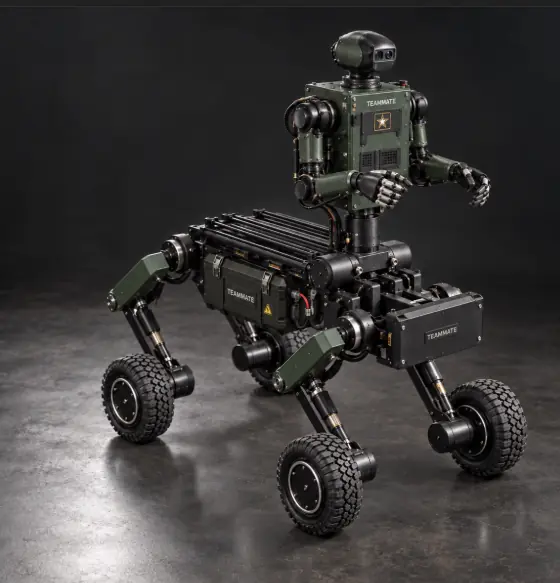
TQ-02 / HANDLER
Dexterous remote work in environments built for people.
A compact upper body adds vision and two manipulation arms for controls, tools, doors, equipment, and stand-off inspection tasks.
Extend human reach into locations where presence is slow, difficult, or unsafe.
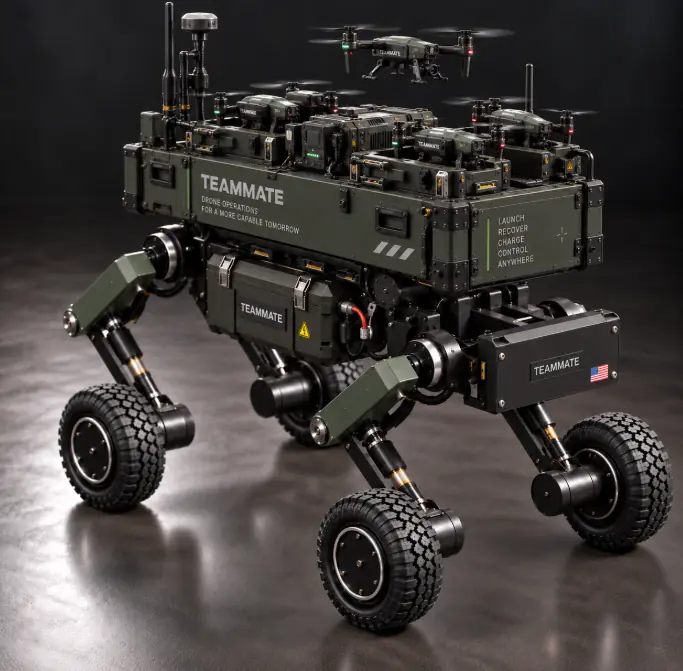
TQ-03 / HIVE
Mobile launch, recovery, charging, and relay for aerial systems.
A protected drone operations module moves the support node with the mission instead of anchoring aircraft to a fixed location.
Increase aerial-system reach while reducing manual launch, recovery, and battery handling.
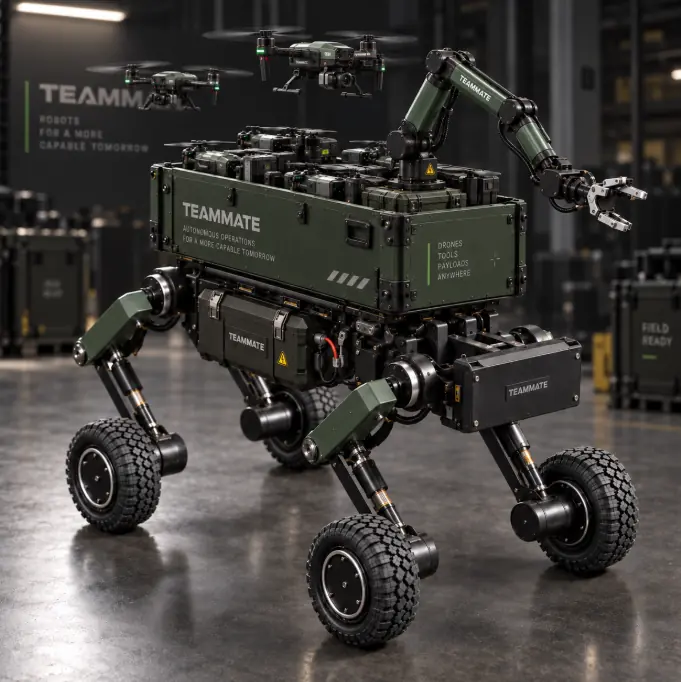
TQ-04 / HIVE-R
Drone support with an integrated service and handling arm.
Hive-R combines protected drone storage with a dexterous arm for payload handling, inspection, and recovery workflows.
Perform more of the aircraft turnaround cycle at the operating edge.
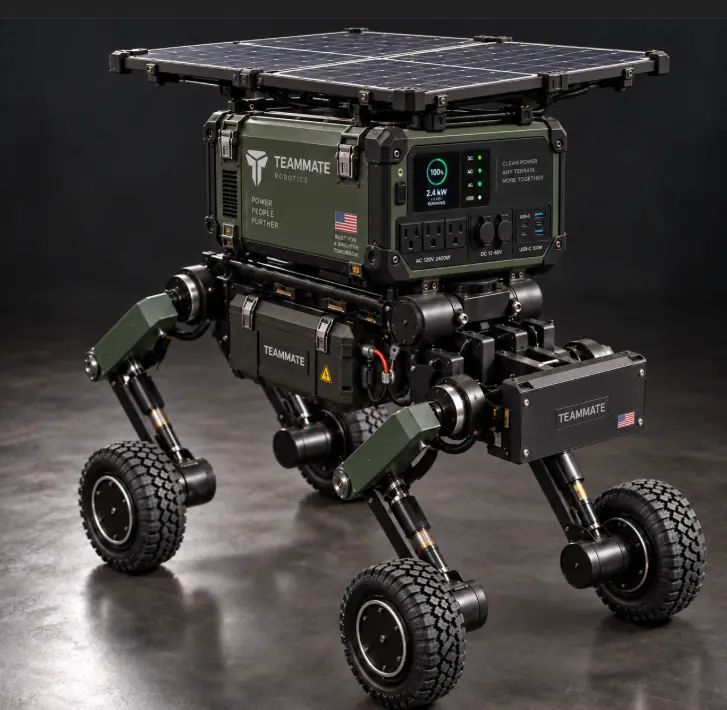
TQ-05 / POWER
Mobile energy for sensors, tools, drones, and field systems.
A protected power module and folding solar array create an autonomous energy carrier for distributed equipment and remote sites.
Bring charging and electrical support to the equipment instead of bringing every asset back to a fixed point.
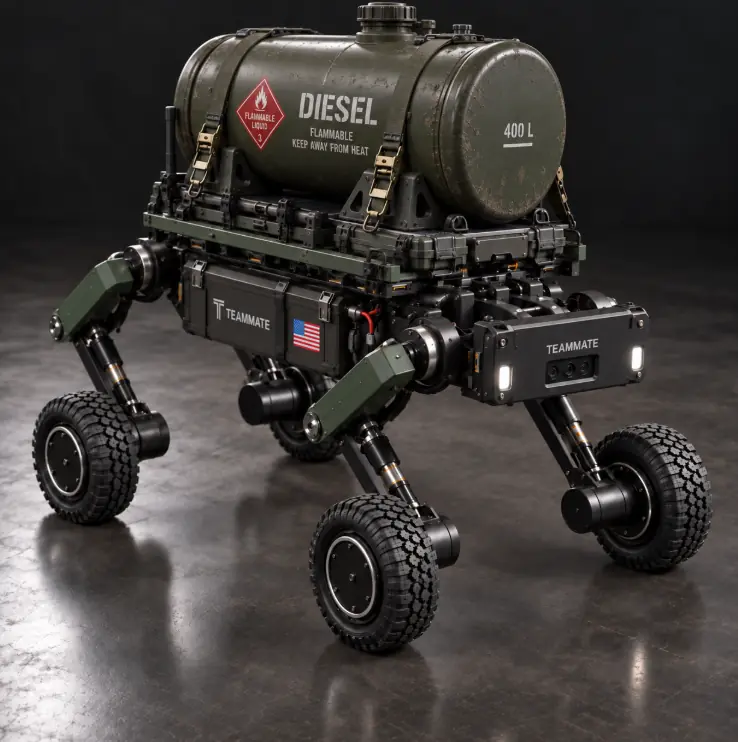
TQ-06 / FUEL
Unmanned liquid sustainment across exposed or difficult routes.
A secured bulk-liquid module explores autonomous transport of fuel or other mission liquids between controlled points.
Reduce routine personnel exposure during repetitive sustainment movement.
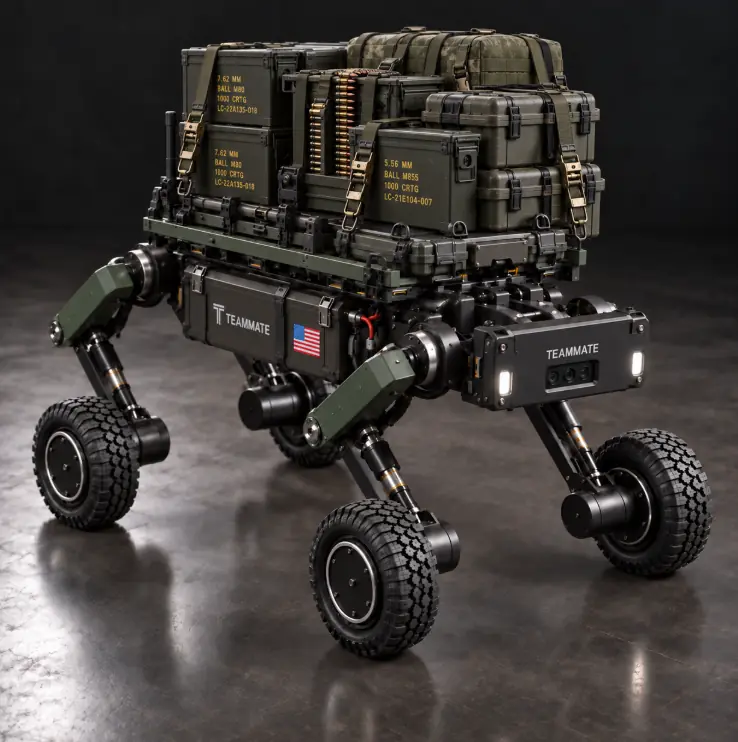
TQ-07 / SUSTAIN
Protected movement of mission supplies and packaged equipment.
A configurable logistics stack carries secured containers and resupply loads on the common mobility platform.
Use one autonomous logistics fleet for varied payloads and changing demand.
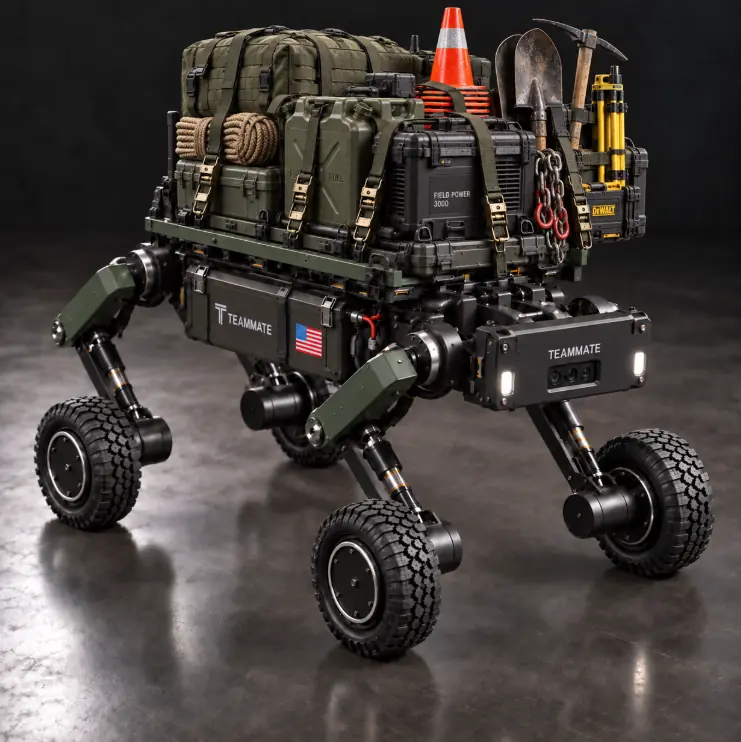
TQ-08 / FIELD
Mobile engineering, recovery, and site-support equipment.
Tools, lighting, recovery equipment, and consumables are organized into a mission kit carried directly to the work area.
Keep the team supplied without assigning a person to every equipment movement.
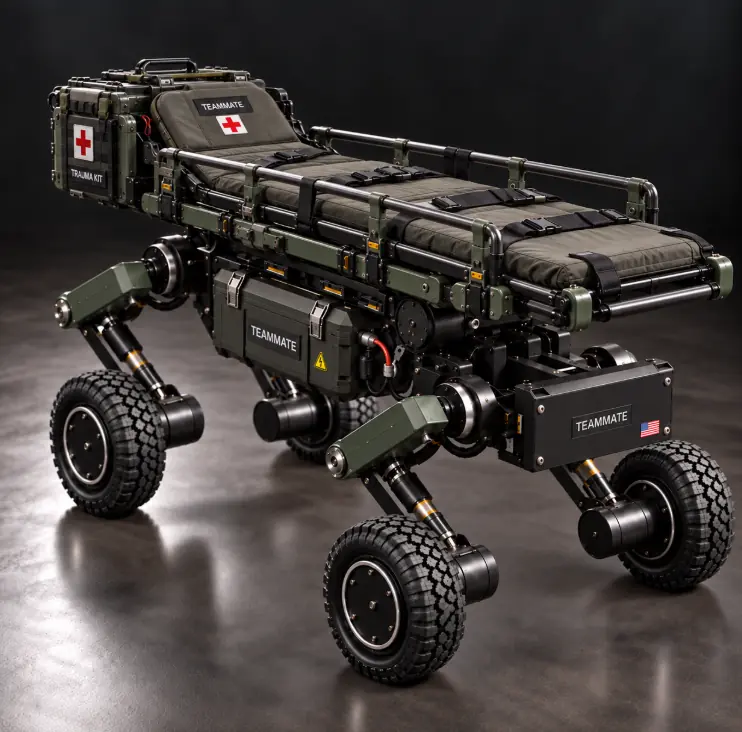
TQ-09 / MEDIC
Remote casualty movement and medical-supply delivery.
A stabilized litter and trauma-support module is intended to move an injured person or critical medical supplies through constrained terrain.
Support extraction while reducing the number of responders required in the hazard area.
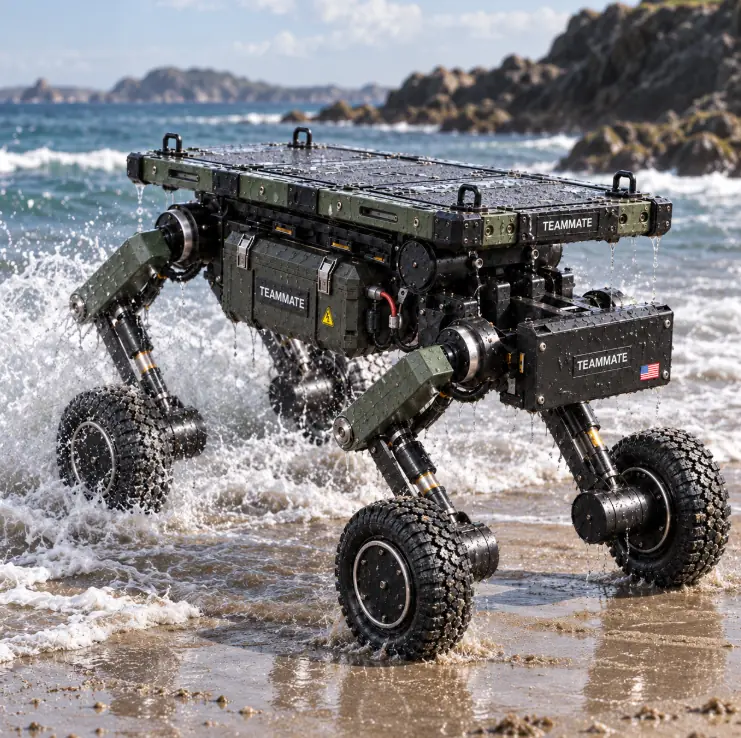
TQ-10 / LITTORAL
Shoreline mobility for sensing, delivery, and support missions.
Environmental sealing and the wheel-leg architecture extend the common platform concept across wet, sandy, and uneven approaches.
Carry useful payloads across transition zones that challenge conventional small vehicles.
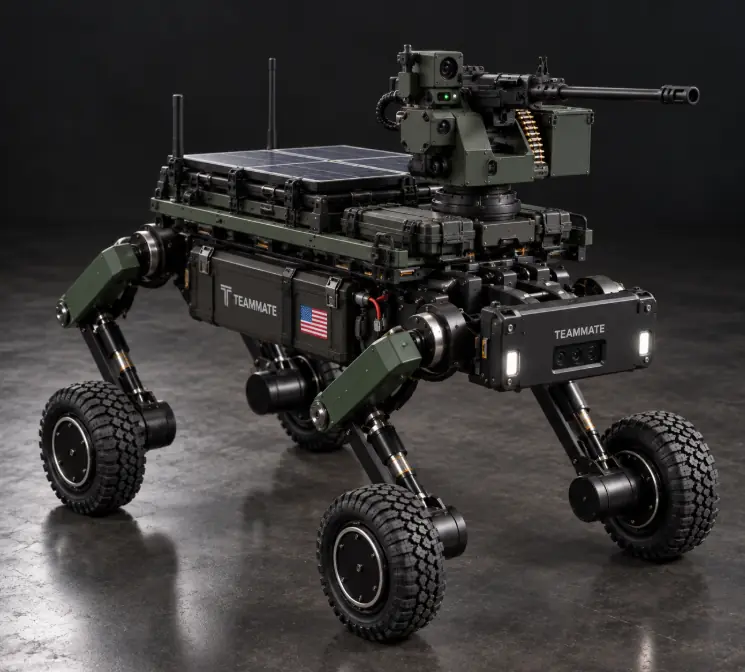
TQ-11 / SENTINEL
Mobile sensing and customer-furnished remote mission payloads.
A stabilized mount, forward perception, communications, and auxiliary power support perimeter and overwatch requirements.
Move sensing and mission effects without creating another crewed position.
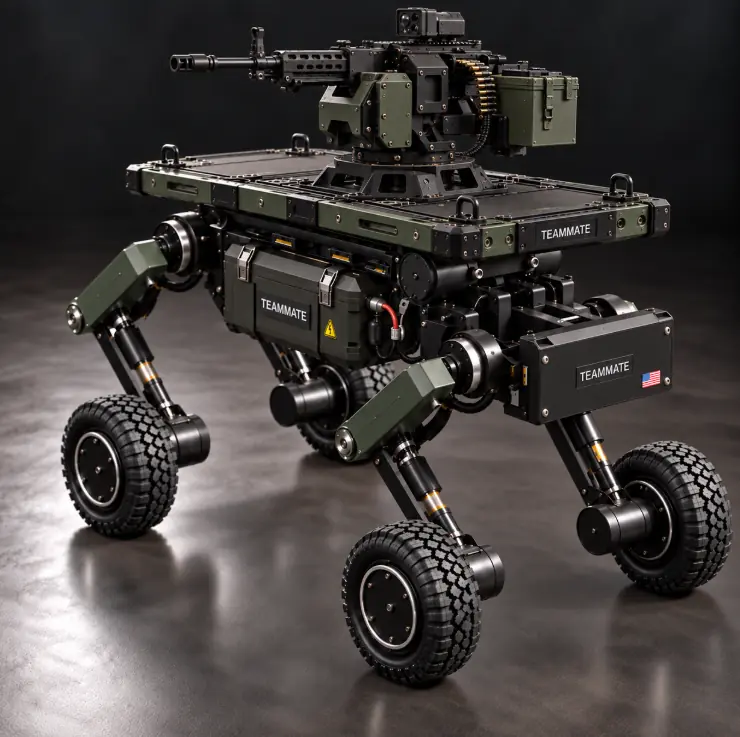
TQ-12 / DEFENDER
Heavy remote mission-station integration on the common deck.
The wide payload deck can support a larger stabilized customer-furnished module with dedicated power, sensing, and communications.
Keep specialized mission hardware mobile while retaining fleet-common mobility and support.
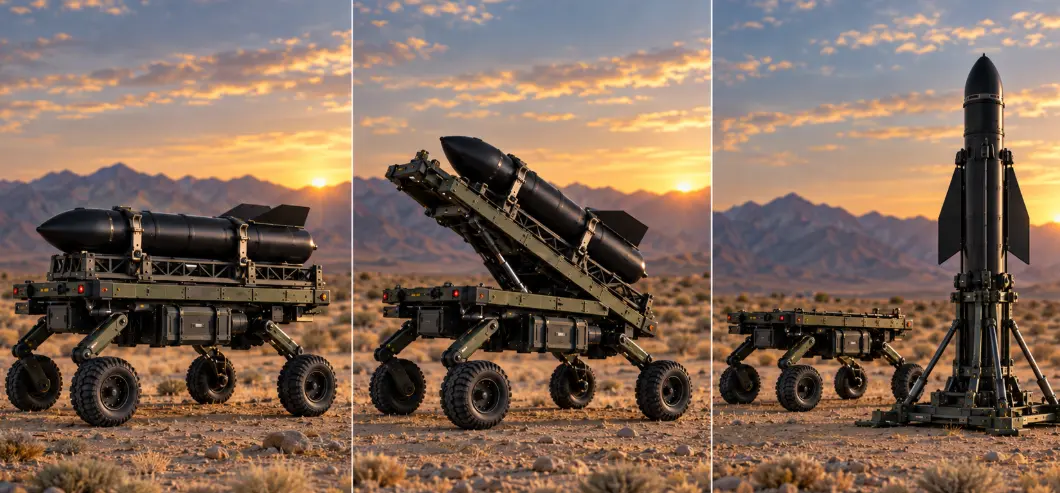
TQ-ALLV / LAUNCH LOGISTICS
Autonomous carriage and emplacement for customer-furnished launch payloads.
A stabilized transport cradle concept allows the common platform to move and emplace a secured program payload before the unmanned carrier withdraws.
Separate payload movement and emplacement from a crewed transport task.
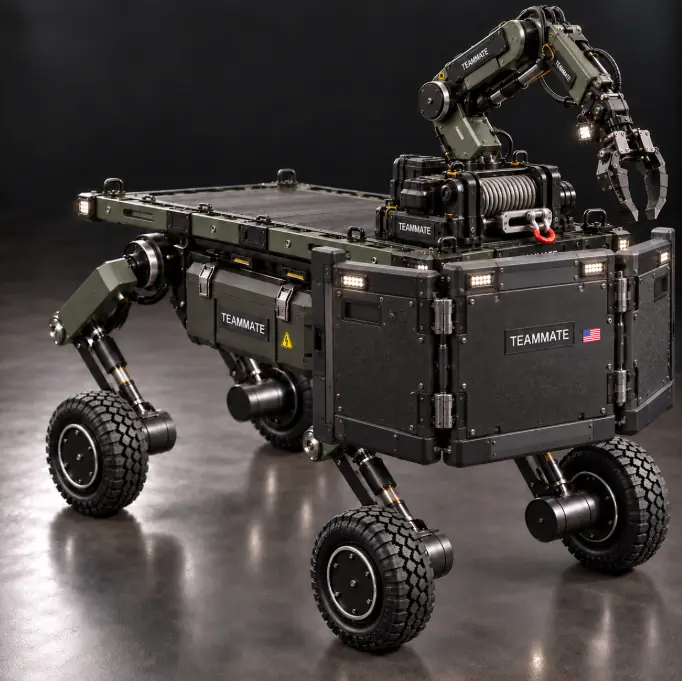
TQ-X / INTERCEPTOR
Mobile physical protection and counter-unmanned-system response.
Folding barrier panels, elevated sensing, a manipulation arm, and recovery equipment create stand-off separation from a hazardous ground system.
Place a reconfigurable protective system between people, infrastructure, and an approaching hazard.
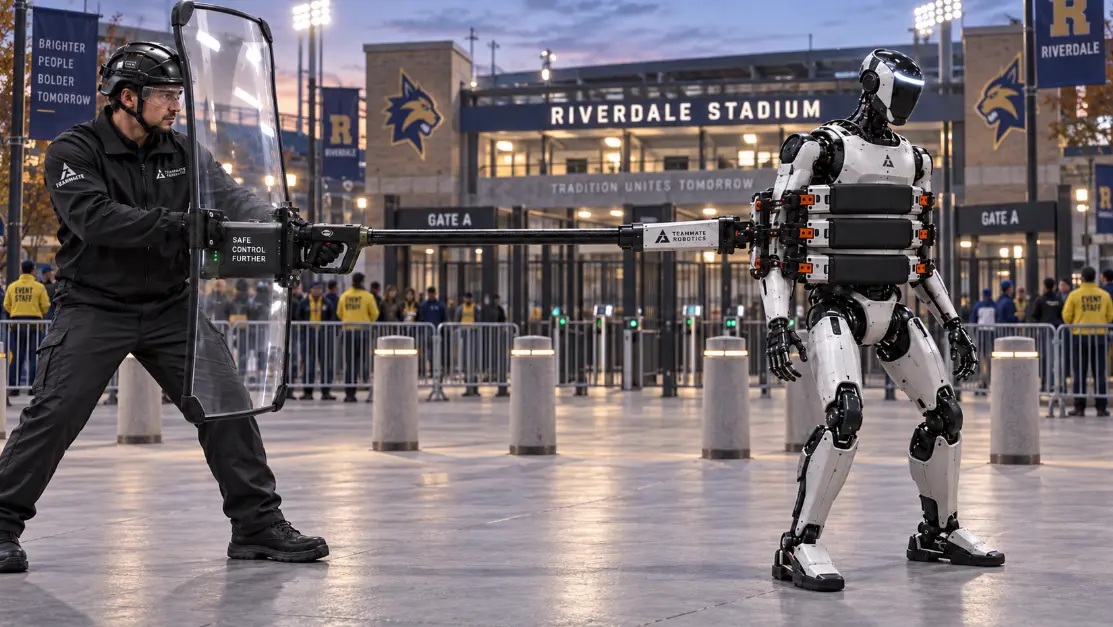
CH-01 / CATCHER
Portable stand-off restraint for malfunctioning or unauthorized humanoid systems.
A shielded operator interface, rigid reach structure, and wide multi-point restraint concept support controlled containment while preserving distance.
Give trained safety teams a physical-control option that does not require direct contact with the machine.
Configurations shown are development concepts. Final capabilities, payloads, specifications, cybersecurity controls, and certifications are established through program requirements and test.


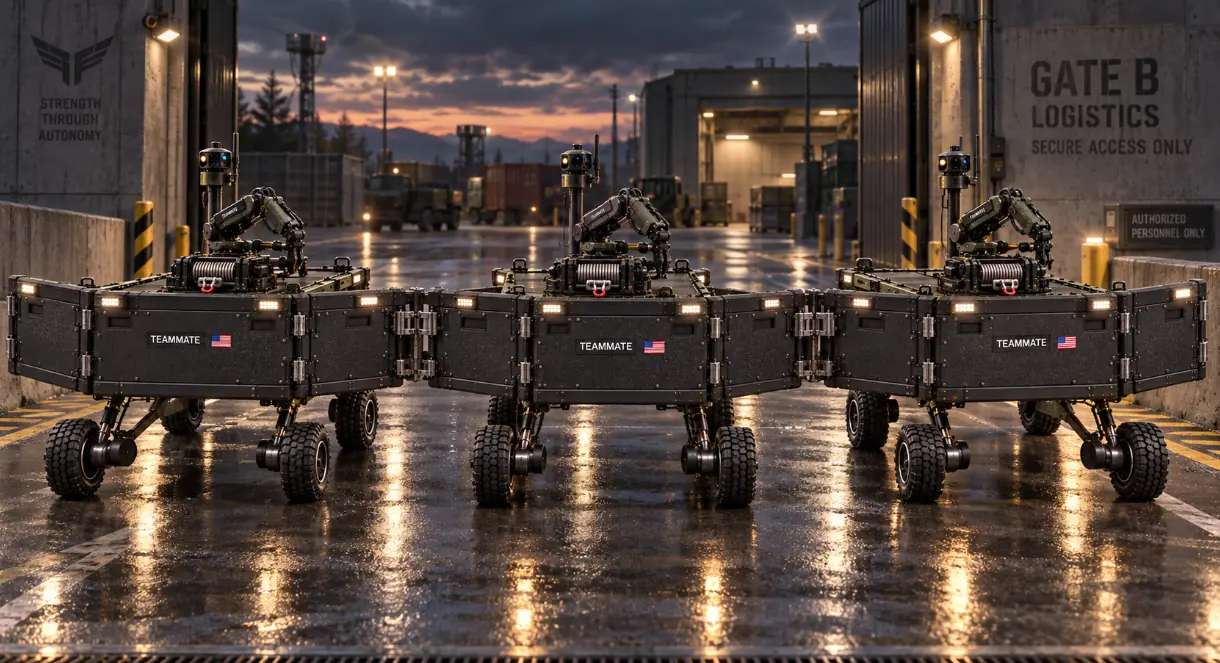
Mobile protective architecture
A deployable barrier, sensor mast, manipulation arm, and recovery equipment turn the common TQ chassis into a mobile protective-response system for controlled environments.
Folding panels create physical separation and expand the platform's protective footprint.
Elevated sensing supports detection, assessment, and accountable operator decisions.
An arm and recovery equipment support stand-off interaction with disabled or hazardous systems.
Protective actions and mission payloads remain under accountable human direction.
Transport. Emplace. Withdraw.
The TQ-ALLV concept carries and emplaces a secured, customer-furnished launch payload while keeping mobility, power, communications, and program controls on a common unmanned platform.
Uses the same wheel-leg mobility architecture and fleet support model as the wider TQ family.
A stabilized cradle concept supports controlled positioning before the carrier clears the emplacement area.
Payload interfaces, interlocks, authority, and test requirements remain defined by the government program.
Safe control from a distance
Teammate Catcher is a portable, human-directed restraint concept for trained safety and security teams responding to malfunctioning or unauthorized humanoid systems.
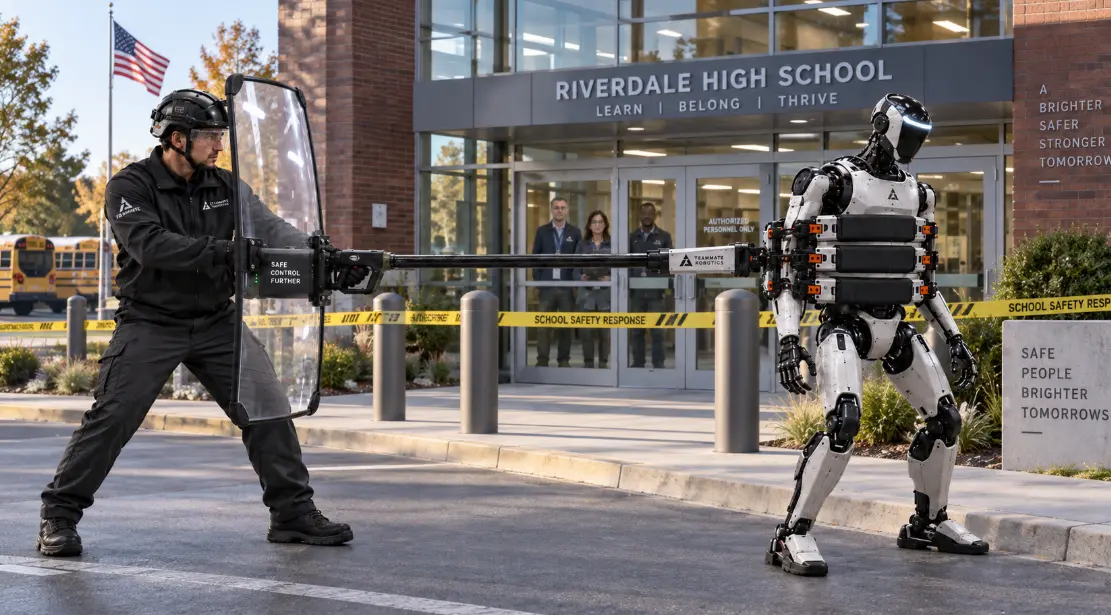
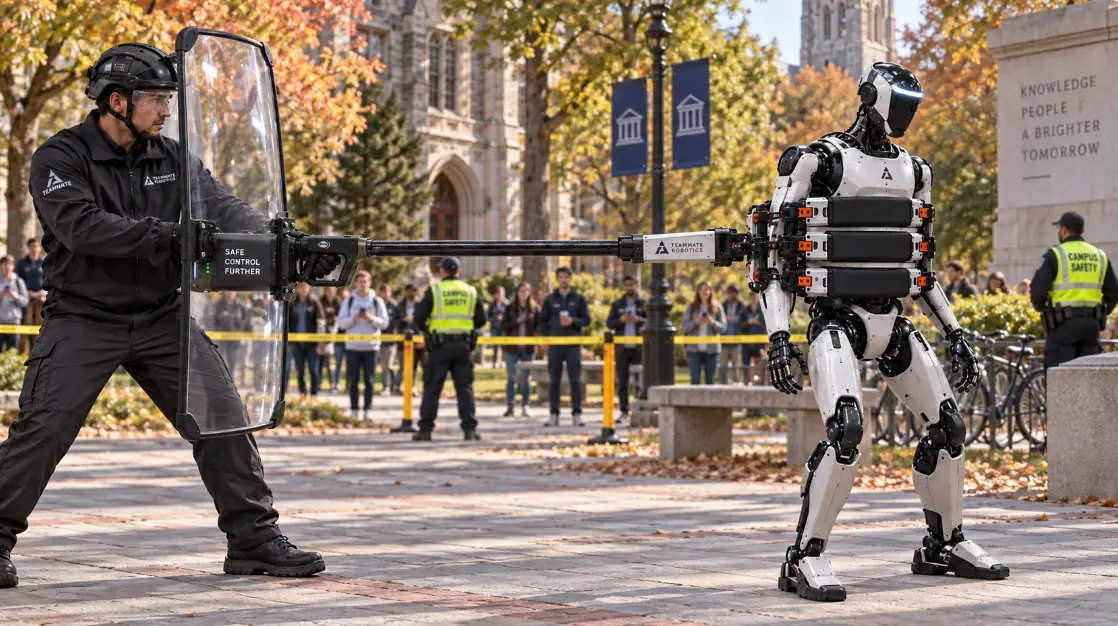
A long rigid control body keeps the operator behind protective equipment and away from direct contact.
A wide, closing restraint geometry is intended to limit torso movement without requiring close physical engagement.
The device remains under trained operator control for authorized safety, recovery, and containment procedures.
Capability where it is needed
Government users can align a common fleet to changing logistics, response, and support requirements.
01Move launch, recovery, charging, and communications support closer to the operating edge.
02Deliver mobile power for sensors, tools, aerial systems, and other field equipment.
03Support remote movement of an injured person while reducing responder exposure.
04Carry tools, recovery equipment, supplies, and mission kits over mixed terrain.
05Extend unmanned delivery and sensing across wet, sandy, and shoreline approaches.
06Reach controls, doors, tools, and equipment designed around human hands.
From requirement to field learning
Teammate's development path starts with the mission and moves through controlled integration and test.
Align the environment, task, payload, operator, constraints, and measures of success.
Configure the common platform around program-specific sensing, tools, power, and communications.
Evaluate mobility, payload behavior, communications, safety, and operator workload.
Collect field feedback with defined oversight, training, maintenance, and escalation procedures.
Refine the system, supply chain, sustainment model, and production plan against validated demand.
Responsible autonomy
Teammate systems are designed around supervised autonomy, clear authority, auditable decisions, and program-defined safety controls. Autonomous navigation does not mean autonomous use of force.
Government programs · Industry partners · General inquiries
Start a conversation
Tell us what you have in mind. We’ll take it from there.
oliver@teammaterobotics.aiTeammate dispatch
Product progress, field updates, and the next chapter for Teammate Robotics.